Sunday, November 22, 2020

Plant: 1x Cyathea browniii- Rare Treefern


Cyathea brownii

"Norfolk Island Tree Fern"

This is regarded as the largest of all treeferns, though in cultivation its dimensions may be exceeded by other species such as C. medullaris, particularly in a cooler climate.  A very robust, beautiful species, closely related to C. cooperi but far more spectacular in size and appearnace.  It is not very common in cultivation outside of Australia.  The fronds can reach up to 20' long and are held in a most attactive habit, and the trunk, which is quite thick under humid conditions, can in the wild reach an incredible height of 100'!  As the fern ages, the trunk appears to look more woody and may also show some taper.

Although it comes from a completely frost free environment, it will tolerate nearly as much frost as C. cooperi, and is also very fast-growing (especially as a young plant) and easy to cultivate, responding to large quantities of fertilizer.  The uncurling croziers are covered in beautiful large, pale brown scales and small, dark brown scales.  The fronds are hardy to about 27°F, and it is well worth overwintering in a zone 8b climate with copious amounts of house insulation, although it will eventually outgrow practical protection measures.  It will perform well in partial sun in most climates where it is hardy (full sun advised in cool maritime climates), and its fast growth enables it to recover from damage quickly.  Very easily raised from spore.


Price: € 18
Shipping: € 9,50 Europe
Shipping: € 26 Worldwide


Plant: 1x Cycas simplicipinna - Rare Cycas Cycad Palm


Cycas simplicipinna

A small, trunkless cycad from northern Thailand, Myanmar, Laos and southern China, where it grows in the understorey of humid forests to an elevation of about 900 m (2950 ft.). It produces several rather large ascendingpinnate leaves.

Price: € 24

Shipping: € 9,50 Europe

Shipping: € 26 Worldwide


Saturday, September 12, 2020

Plant: 1x Lagerstoemia indica - deep purple! well rooted plant


Lagerstroemia indica (also known as crape myrtlecrepe myrtlecrêpe myrtlecrepeflower is a species in the genus Lagerstroemia in the family Lythraceae, which is native to the Indian Subcontinent (hence the name indica), and also to Southeast AsiaChinaKorea and Japan.  Lagerstroemia indica is an often multi-stemmed, deciduous tree with a wide spreading, flat topped, rounded, or even spike shaped open habit. Planted in full sun or under canopy, the tree is a popular nesting shrub for songbirds and wrens.

Price: € 10
Shipping: € 9,50 Europe
Shipping: € 26 Worldwide


Saturday, August 8, 2020

Cycad: 1x Lepidozamia hopei- Rare Cycas Cycad Palm -no Seeds


Perhaps the worlds largest cycad, this species from northeastern Queensland, Australia forms a trunk that can reach 50 cm (20 in.) in diameter and over 17 m (55 ft.) tall. Its spreading crown can hold up to 100 pinnate leaves with broad, beautifully glossy leaflets. Naturally occuring in rainforests from low altitude to 1000 m (3300 ft.), it adapts well to tropical and many warm temperate climates and can take a rare light frost. Young plants are attractive from their first leaf on and adapt easily to cultivation in containers.


Price: € 29

Shipping: € 9,50 Europe

Shipping: € 18/24 Worldwide


Saturday, July 25, 2020

Plant: 1x Xanthosoma sagiitifolium -Arrowhead Elephant Ear- no Seeds


XANTHOSOMA sagittifolium
Arrowhead Elephant Ear
A tropical aroid with very large green elephant ear-like leaves quilted and slightly ruffled. Used in the tropical garden scheme for exotic foliage effect.
Native to Tropical America.
Max height 1.8m. Max spread 1.2m.
Requires part/full shade.
Soil must be kept moist.

Price: € 10
Shipping: € 9,50 Europe
Shipping: € 18/24 Worldwide


Saturday, July 18, 2020

Seeds: 5x Macrozamia moorei -fresh!- Cycad Palm


The largest of the Macrozamia, this stunning species from Australia's east coast can develop a massive trunk up to 8 m (26 ft) tall and 80 cm (32 in) across that carries a huge, rounded crown with up to several hundred dark bluish-green fronds. It is a very robust plant that will thrive in full sun in tropical as well as temperate climates, and tolerates drought as well as serious frosts.


Price: 5 seeds € 30

Shipping: € 15 worldwide


Cycad: 1x Zamia variegata - Rare Cycas Cycad Palm -no Seeds


Zamia variegata

A small cycad with very attractive, green and yellow mottled leaves, native to rainforests and pine-oak forests in Chiapas in southern Mexico and in Guatemala, Belize and Honduras. It is considered endangered through destruction of its natural habitat by human activities.

Price: € 23
Shipping: € 9,50 Europe
Shipping: € 18/24 Worldwide


Cycad: 1x Encephalartos transvensosus - Modjadji cycad - Cycad Palm No Seeds


ENCEPHALARTOS TRANSVENOSUS

As a garden subject, Encephalartos transvenosus, with its glossy dark-green leaves, is one of the most spectacular and tallest of all cycad species. It is also one of the fastest growing, the seedlings growing rapidly and developing into an attractive garden plant with 1-m long leaves in four to five years.

Description
The stem reaches a height of 12 to13 m and 0.4-0.45 m in diameter. Typical of the species is the appearance of numerous dormant buds along the base of the stem. The new leaves are light green covered with fine brown hairs, while the mature leaves develop to from 1.5 to 2.5 m in length and are dark green and glossy. The leaflets, attached to the leaf stalk, are 160-250 x 25-45 mm, but reduce in size closer to the base of the leaf stalk. The leaflets overlap and a distinguishing feature is that these leaflets are reflexed from the leaf stalk.

This species is regarded as a tree as it develops to a height of 6 to 8 m or more with a leaf spread of up to 5 m. Being a gymnosperm, these plants produce cones. They are dioecious, which means male and female cones are produced on separate plants. Male cones develop to a length of 300-400 mm; the female cones are very large and heavy. The cones are golden brown in colour and are produced in late summer, weighing more than 40 kg.

Generally cycads are regarded to be slow-growing; however, given ideal growing conditions, this species will, in five years, develop into a worthwhile garden subject with leaves of at least a metre in length. All cycads are regarded as being long-lived, surviving for hundreds of years.

Conservation Status
From a conservation point of view this species is regarded as not being threatened.

Distribution and habitat
The Modjadji cycad is native to South Africa, occurring in the Letaba District of Mpumalanga at an altitude of 600-1 000 m. A rainfall greater than 1 500 mm a year is experienced in the region, with frequent mists providing cool, humid summers. The region is frost-free.

Derivation of name and historical aspects
This species was described in 1926. The Rain Queens (Modjadji) of the Lovedu region have protected this locally common species for centuries. The specific name transvenosus refers to the network of veins which can be seen when a leaf is held up against the light.

This species is closely related to E. paucidentatus ; however, it can be easily identified as its leaflets are broader than those of E. paucidentatus. The genus is restricted to Africa and consists of approximately 69 species.

Ecology
Porcupines are known to ring-bark cycads in some areas and, if accessible, the cones are destroyed by the porcupines when they strip the cones of their succulent cone scales. Baboons occassionally break off the immature cones. The Leopard Magpie moth larva is capable of destroying the newly sprouted leaves of a cycad. Certain seed-eating snout beetles, of which there are a number of species, can in the case of a heavy infestation, destroy an entire seed crop. The attractive, brightly coloured seeds attract squirrels, baboons, monkeys and dassies. Some birds such as louries, parrots and trumpeter hornbills are also attracted to the seeds. Only the soft tissue covering the seed is eaten and the kernel is then discarded.

Uses
In the past, the pith from the stem of cycads was removed, then enclosed in an animal skin, fermented and ground into a meal which was used to make bread, hence the Afrikaans name broodboom = bread tree. Cycads develop into attractive feature plants and E. transvenosus is a particularly attractive species, provided it has sufficient space and ideal growing conditions.

Growing Encephalartos transvenosus
This species is one of the most attractive of the larger cycad species and responds well to cultivation in frost-free areas, with regular watering in the dry months. Good drainage is essential and protection from sun in very hot areas will help to prevent the leaves from burning.

Adapts well to full sun or light shade and prefers a sheltered position providing protection from the prevailing winds. When young they can be grown as a container plant and eventually transplanted into the garden. This species transplants easily as a mature plant, although it is recommended to remove all the leaves before doing so. This makes for easier handling and the plant will recover sooner due to less moisture loss. Irrigation systems can be detrimental to cycads, damaging the leaves and stems from the pressure of the water as well as over-watering.

Price: € 19
Shipping: € 9,50 Europe
Shipping: € 18/24 Worldwide


Cycad: 1x Encephalartos senticosus - Cycad Palm No Seeds


ENCEPHALARTOS SENTICOSUS

Locality: This species can be found in KwaZulu-Natal, South Africa and in the Lebombo mountains, Swaziland. There are also isolated populations reported in Mozambique along the border of Swaziland. This species is found in a variety of different habitats: from grasslands, to forests, to rocky hills and slopes, to sheer cliffs. The areas in which they are found are arid to semi-arid.

Plant Size: This is a medium to large sized species. The leaves on this species get about two meters long, and stems can reach heights of about four meters. This species can produce basal suckers, but generally not heavily.

Other Characteristics: This species is a beautiful green leafed cycad. It is a fairly fast grower and crowns tend to bee full and lush. This species is similar in its appearance to both Encephalartos lebomboensis (which this species shares habitat) and Encephalartos natalensis. Some of the key differences that can be observed is that E. senticosus have wooly apical crowns and female cones. The spination of the leaflets varies from the afore mentioned species as well. Female cones of this species are a yellowish tan color with smooth scales and are wooly. Male cones are a yellowish orange color.

Culture: In coastal and inland areas, this plant does well in full or partial sun. For desert areas, this species would do well in partial sun or filtered light. This species prefers a soil that drains well.

Landscape Usage: This is a showy, green species and should be placed as such. They do make spectacular shows and need some room. I would place them in the mid to far ranges of a planting (depending on what you are growing), but not over-crowd them so the can be viewed and appreciated.

Price: € 19
Shipping: € 9,50 Europe
Shipping: € 18/24 Worldwide


Cycad: 1x Zamia standleyi- Rare Cycas Cycad Palm -no Seeds


Zamia standleyi

A striking, small Zamia native to seasonally dry forests in Guatemala and Honduras with few, superb, glossy, most elegantly arching leaves that often emerge in a stunning bronze or red. It is best suited to a spot under established canopy in a warm temperate or tropical climate.


Price: € 19
Shipping: € 9,50 Europe
Shipping: € 18/24 Worldwide


Cycad: 1x Encephalartos lebomboensis 'Mananga'- Cycad Palm No Seeds


ENCEPHALARTOS LEBOMBOENSIS


Encephalartos lebomboensis was first described in 1949 by Dr Inez Verdoorn. Its grows in the Lebombo Mountains, stretching from northern KwaZulu-Natal through Swaziland and up into Mpumalanga and Mozambique. In 1995 Dr Piet Vorster re-named the plants from the central part of the geographic range (the Lebombo range from 50 km north of Siteki in Swaziland to the Josini Dam/Pongolapoort Dam in Kwazulu-Natal) as Encephalartos senticosus, based mainly on differences in their cones.

Encephalartos lebomboensis occurs in two areas, a northern form around Mananga in Mpumalanga and a southern form centred around Piet Retief on the upper Pongola River Valley. It is a medium to large cycad with a trunk which can grow to 12 feet tall over time. Its leaves dark green, glossy leaves arch outward. It can form numerous suckers from the base and occasional trunk offsets. Stems of the Piet Retief form are shorter and fatter, with finer and more spiny leaflets.

All forms of Encephalartos lebomboensis grow on the slopes of high ridges and cliffs along river valleys. They grow in full sun, in a hot summer climate with annual rainfall of 25-30 inches per year, cool foggy winters. It thrives in tropical and warm temperature climates, grows well in sun or light shade, and is relatively fast growing for a cycad. Like nearly all cycads, it needs excellent drainage and may be damaged by heavy frosts, but can withstand light frosts.


Price: € 19
Shipping: € 9,50 Europe
Shipping: € 18/24 Worldwide
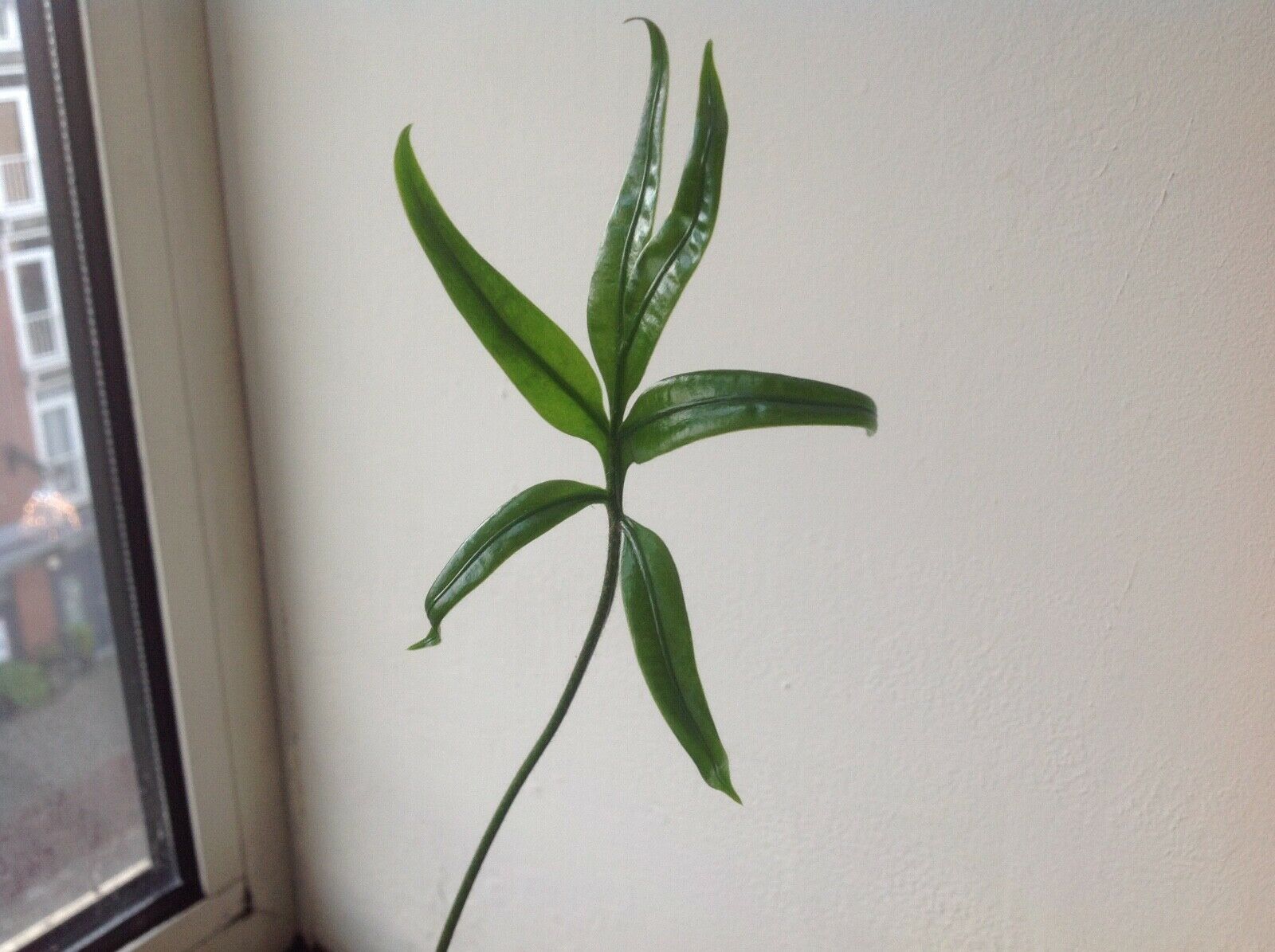


Cycad: 1x Cycas sp. Thai Silver - Rare Cycas Cycad Palm -no Seeds


Cycas sp. Thai Silver
Native to mountain forests at moderate and high altitudes in Kanjanaburi province in western Thailand, this very attractive, undescribed species has only recently been discovered. It sports a beautiful crown of most stunning, silvery-white foliage, carried by short, stocky trunks often blackened by fire. In cultivation it should grow best in subtropical/warm temperate areas and should have no problem with an occasional light freeze.


Price: € 18
Shipping: € 9,50 Europe
Shipping: € 18/24 Worldwide


Cycad: 1x Cycas ophiolitica- Rare Cycas Cycad Palm -no Seeds


Cycas ophiolitica
Marlborough Blue Cycad

An excellent Australian species with glaucous to powdery blue leaves. It can be grown in warm temperate to tropical areas but prefers hot, dry inland conditions and low humidity. Heavy soils (serpentine) with excellent drainage and a place in full sun will produce optimum colour.

Price: € 26
Shipping: € 9,50 Europe
Shipping: € 18/24 Worldwide


Cycad: 1x Cycas media -Australian Sago- Rare Cycas Cycad Palm -no Seeds


Cycas media

This attractive cycad forms dense colonies in northeastern Australia. Growing quickly and easily, it should be in everyone's collection. It has grass green leaves and a trunk that grows ultimately to around 3.5 m (12 ft.) tall, though that may take a little time. Until then, grow it as an unusual house plant, or plant it outside in the warm temperate to tropical garden. It will tolerate light frosts, too.


Price: € 23
Shipping: € 9,50 Europe
Shipping: € 18/24 Worldwide


Cycad: 1x Zamia fairchildiana - Rare Cycas Cycad Palm -no Seeds


Zamia fairchildiana

An adaptive, small cycad native to the understorey of rainforests in southeastern Costa Rica and western Panama from lowlands to 1500 m (5000 ft.). It forms a slender trunk topped by a spreading crown of up to 10 arching leaves with prickly petioles and wide, glossy green leaflets to 40 cm (16 in.) long. It makes a gorgeous ornamental for tropical and some warm temperate areas and is ideal for cultivation in pots in colder climates.


Price: € 32
Shipping: € 9,50 Europe
Shipping: € 18/24 Worldwide


Cycad: 1x Macrozamia mountperriensis - Rare Cycas Cycad Palm -no Seeds


Macrozamia mountperriensis
A slightly smaller version of Macrozamia miquelii, this rare species is similarly robust and easy to cultivate and well suitable for containers.


Price: € 23 
Shipping: € 9,50 Europe
Shipping: € 18/24 Worldwide